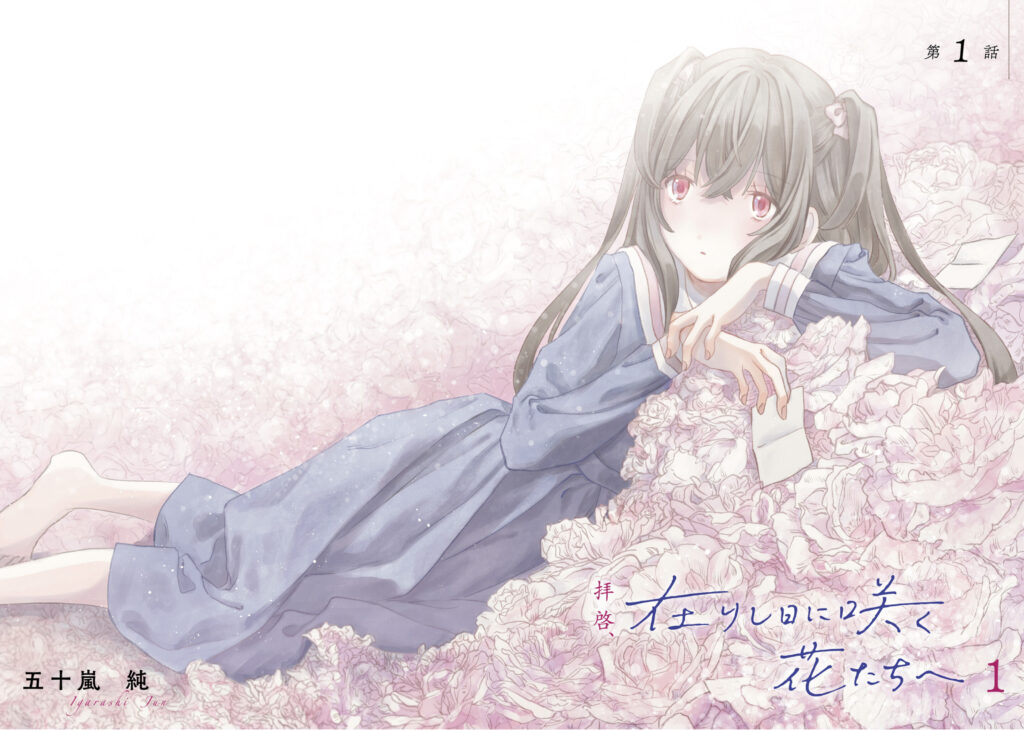
Folks, if you can believe it, I’m talking about yuri again. Today’s topic is Haikei, Arishihi ni Saku Hanatachi e1 (AriSaku for short), a series by Jun Igarashi that deserves significantly more attention in the West than it’s received so far. At some point, I’d like to do a deeper look into the themes of AriSaku, but for now I just want to get people to check it out. I legitimately think this is one of the best yuri series running today and deserves the same level of support from international fans as Love Bullet has seen. To avoid spoiling the surprises, I’m only going to give an overview of the first few chapters and why I think this series feels so special.
AriSaku begins when Kasumi Sakuragawa, a high school freshman with a penchant for literary escapism, discovers a letter inside the school library’s copy of the second volume of Hana Monogatari, a century old collection of stories depicting class S relationships between women, each themed around a different flower. The letter is entirely anonymous apart from its rose-themed stationary but asks whoever discovers it if they would like to enter into an S relationship like those depicted in the book. A staple of such relationships is the private exchange of letters (if you’d like to know more about S, I wrote a post about it), so the sender requests the recipient to place an envelope of their own into the book to express their interest.
Kasumi is skeptical if the letter is serious but sees no harm in responding. This kicks off a series of increasingly intimate communications between Kasumi and the unknown woman, all done via the library book. The anonymity between the two allows Kasumi to open up to her newfound onee-sama in ways she’s been unable to with her friends, but it also represents an unimpeachable barrier between the two that feeds into her deep-rooted feelings of self hatred and disgust. Nonetheless, she longs to learn as much as she can about the girl who accepted her, coming up with half-baked schemes to discover her identity. Eventually, the letters culminate in her onee-sama asking if she’d like to meet in person.
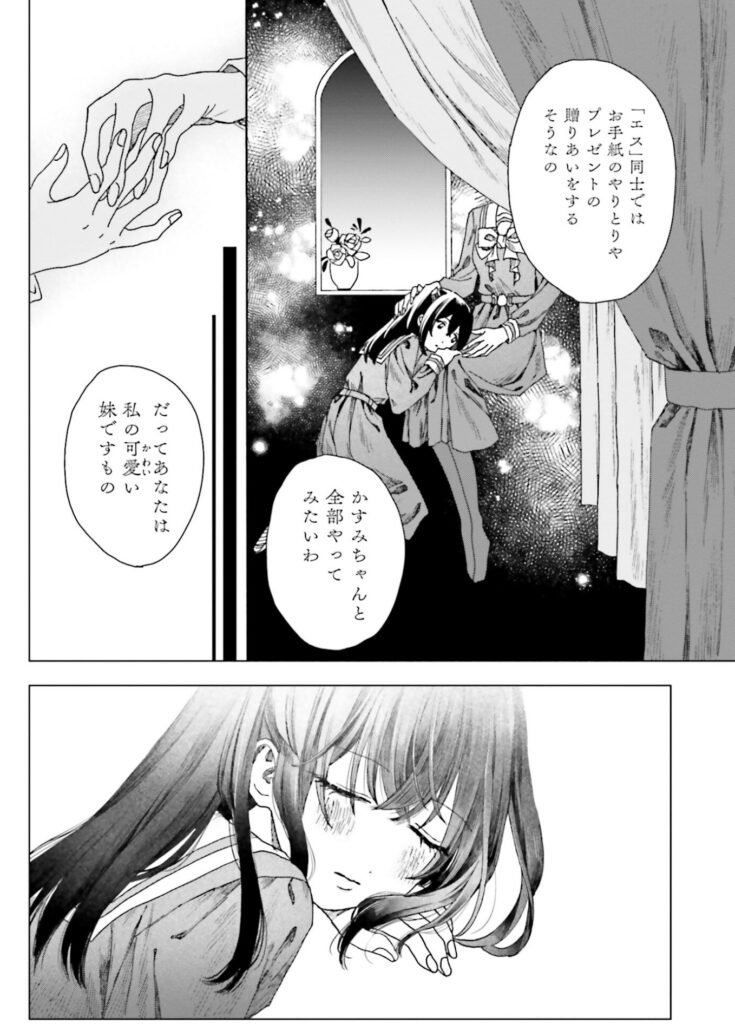
I was afraid the story might stagnate with its slow burn setup, but it regularly progresses while developing the characters’ personalities and pasts with remarkable poise. Other couples appear to supplement the main story, each one a modern interpretation of a story from the original Hana Monogatari. This really makes me wish the entirety of Hana Monogatari had an English translation, but sadly only a few of its stories have received one. Fortunately, the series is easily readable without being familiar with its inspiration.
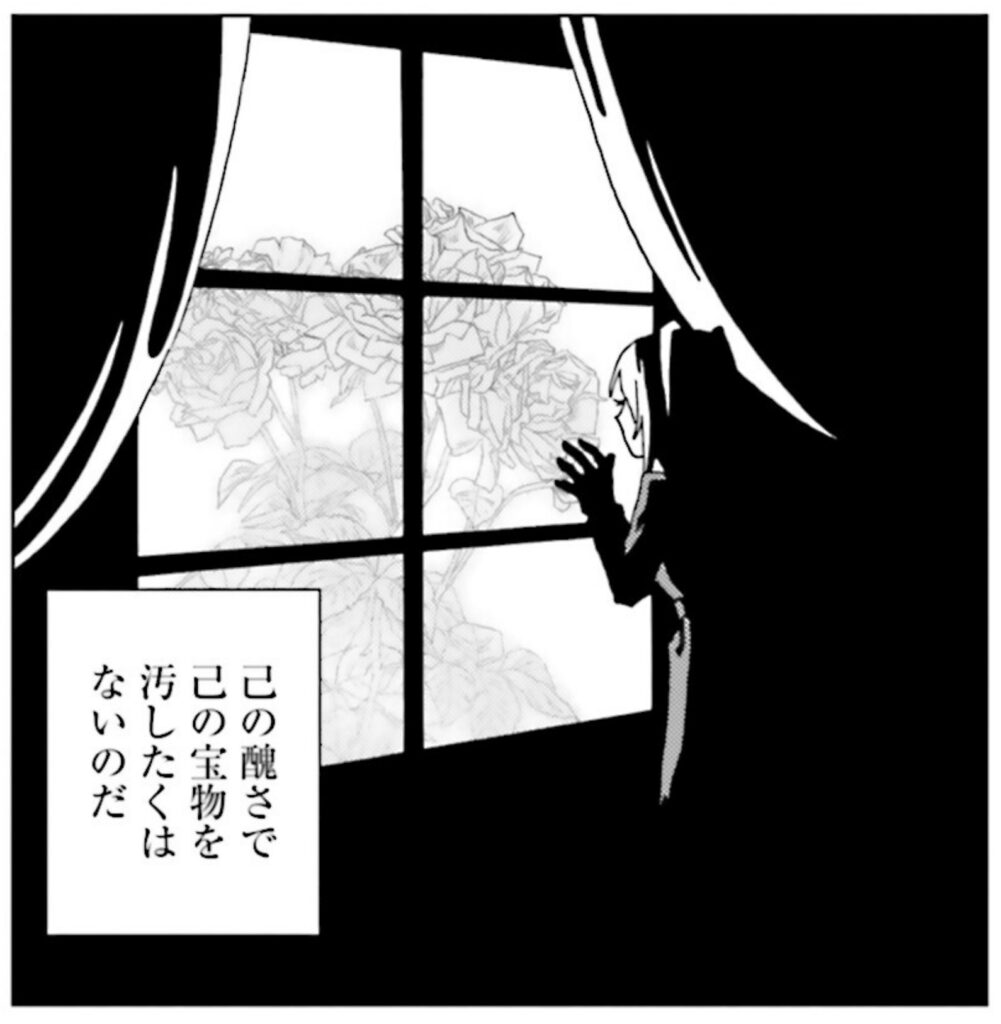
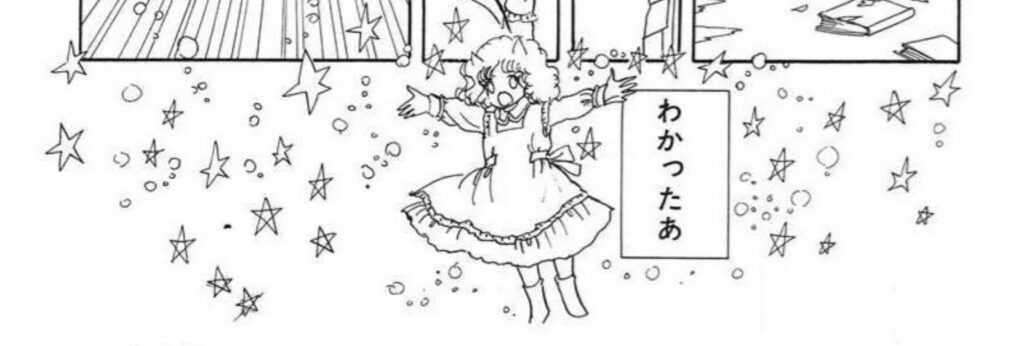
And the art! If it wasn’t already obvious from the few images I’ve included in this post, Jun Igarashi’s artwork is absolutely gorgeous, finding inspiration from the 1970’s shoujo series Wata no Kunihoshi to fit the theme of the story. I regularly paused just to take in how ridiculously cute some of the characters are. The style shifts to fit the context and emotions of each scene, from flowery allegories and dramatic shoujo-esque embraces to some of the tiniest and cutest fellas I’ve ever seen comedically interacting. I’ve intentionally left depictions of any of the other characters out of this post to maintain the mystery behind the identity of Kasumi’s love, but rest assured I wanna put my head through a wall with all the adorable girls populating her school.
Kasumi’s relationship with her mysterious onee-sama will certainly stir up the memories and feelings of anyone who’s built a relationship online, romantic or otherwise. There’s no anchor or safety net when the only line of communication between one another is anonymous and can be cut without warning from either side. Anxieties build over each and every sentence written, anxieties that can only be assuaged so much with faceless responses. But alongside the fears are the promise of something special, a bond built upon freer expression than those built face-to-face.
For a series with such an innocent setup, AriSaku doesn’t stray away from darker themes. Kasumi often doesn’t feel good enough to live up to her onee-sama’s imaginations, feelings that are spurred on by her past failings and traumas. Couples share secrets together that don’t leak outside of their private interactions, some of which are quite cute and others that are fairly sinister. The thrill of sharing secrets comes up quite often in the manga, and it feels particularly relevant to those who have had to hide their relationships or traumas for one reason or another.
AriSaku runs under Kadokawa’s Web Comic Apanta label and currently releases biweekly. Being released as a web series means it doesn’t receive as much exposure as print series in publications like Yuri Hime and Manga Time Kirara. I would really love if you considered buying the physical or digital tankobon releases if you check out AriSaku and enjoy it as much as I do.
You can pick up the digital versions on Book Walker, Rakuten Kobo or a variety of other sources. A guide for using Book Walker can be found here. The physical release should be available just about anywhere you can buy Japanese manga. CD Japan is probably the easiest source if you don’t speak Japanese. If you can’t afford to pick the series up but would still like to support the author, you can follow their Bluesky account or send them a support message through Comic Walker.

- 拝啓、在りし日に咲く花たちへ, unofficially translated as Dear Flowers That Bloom in Days of Yore. ↩︎
Leave a Reply