Last year, the seasonal anime watcher returned (that’s me). The opening season of 2026 had surprising variety on offer, including a bunch of solid romance shows. I eat that shit up. Let’s talk about what I watched!
The Invisible Man and His Soon-To-Be Wife
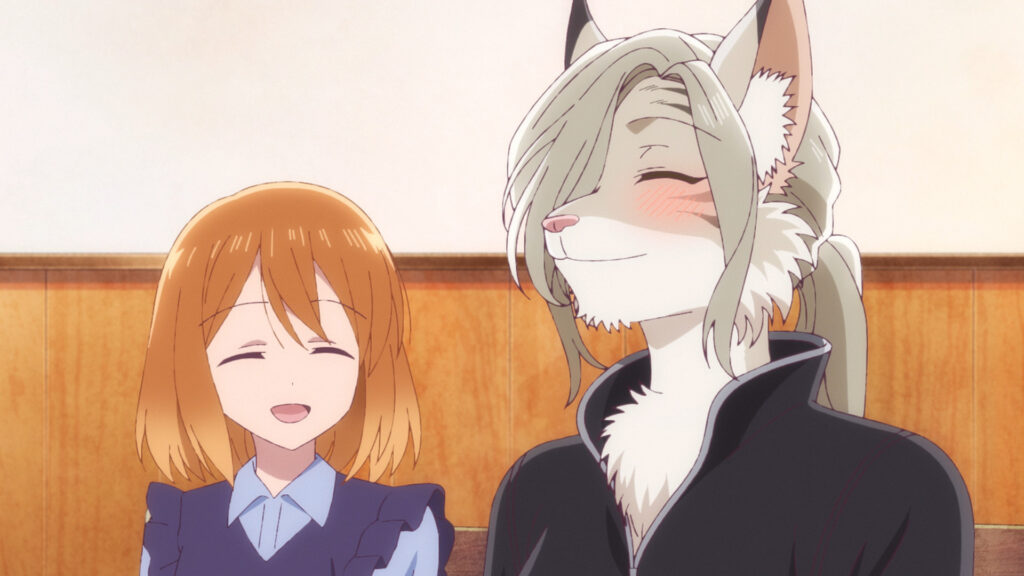
Watch out folks, we’ve got a girl who makes strange squeaking noises. The Invisible Man and His Soon-To-Be Wife, fittingly, depicts the relationship an invisible man named Akira and his soon-to-be wife, Shizuka. The show takes place in a world where all sorts of humanoid races coexist, from furries to scalies to gay men. It’s hard to imagine such a world, I know. Our main girl Shizuka is blind, herself, and I think they give her a run-of-the-mill man-in-a-sweater coworker as a show of good faith that her blindness isn’t the reason she’s in this world. Humans exist here too! But then that coworker turns out to be gay… Well, let’s not examine that too much right now.
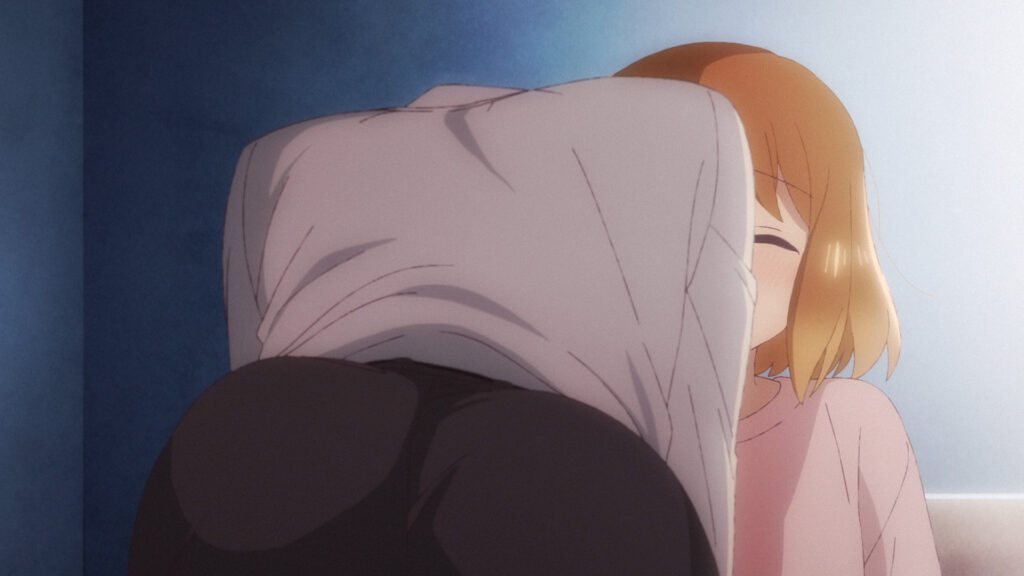
Like I mentioned, this was a crazy good season for romance anime, but this is probably the easiest to recommend. It’s got adults having adult relationships! People love that sort of stuff. This show is absolutely adorable. It skates the line of saccharine levels of sweetness, but I don’t think it’s ever too much. Shizuka is just a weird girl who squeaks a lot and has never dated before, so the way she acts is pretty believable when a dashing young lad comes to sweep her off her feet. How do I know he’s dashing when he’s invisible? Well:
An inherent problem with stories depicting various types of fantasy races living together is that they commonly want to talk about racial issues, usually with a “we’re all the same” mantra. That’s admirable. But then they’ll have episode after episode about the physical differences between the various types of inhabitants of the world, leading to social orders and laws that are inherently discriminatory. This makes sense when you have invisible men and harpies living together, but it makes for a pretty questionable racial allegory. Furthermore, I think getting too into the physical characteristics of “monster people” is a bit uncomfortable.
While (hopefully) nothing will ever be as bad as A Cenatur’s Life‘s “how do horse girls pee, political correctness is ruining our society, we’re all high school girls here so let’s talk about our animal pussies, the holocaust was bad but maybe the Jews were bad too” far right propaganda shitshow, even series like Interviews with Monster Girls kind of give me the ick. For the most part, Invisible Man plays it safe enough that these aspects aren’t particularly bothersome and usually deal more with the personal experiences of the characters rather than their races’ struggles in the world. Well, except for the whole “white elves bless people and dark elves curse people” thing. That wasn’t great. I think it’s a pretty good show otherwise! 😀
Journal with Witch
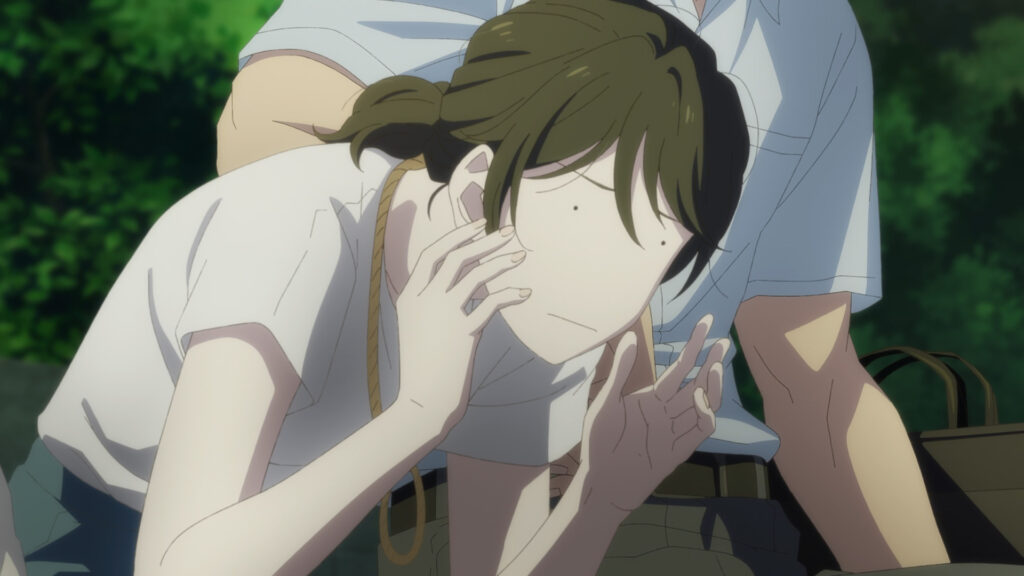
Oh boy. Journal with Witch. People apparently love this one. The story begins when Asa, on the verge of graduating from middle school, suddenly loses both of her parents in a car crash and is brought in by her mother’s estranged sister, Makio. As a typical, plain girl from a fairly stiff and restrained family, she’s taken aback by the alternative lifestyle Makio leads. Makio makes a living as an author and rejects social norms in her friendships and newfound role of caretaker, prioritizing herself over others. Ostensibly, the show is about Asa processing her loss, but it’s equally about her time with Makio serving as the impetus for her to rethink how she’s lived thus far and how she wants to change upon entering high school.
This feels like a series that was designed to win awards. Coming of age? Check. Dealing with loss? Check. LGBT representation? Check. Characters who are supposed to be awkward around others constantly waxing poetic in conversation? You bet!!! I’m not necessarily against intentionally trying to write a prestigious story, but the problem with Journal with Witch is that outside a handful of nuggets of wisdom sprinkled throughout, it feels like it doesn’t really know what it wants to say. Every couple of episodes I thought they were really onto something, only for the next scene to unwind whatever they were building towards.
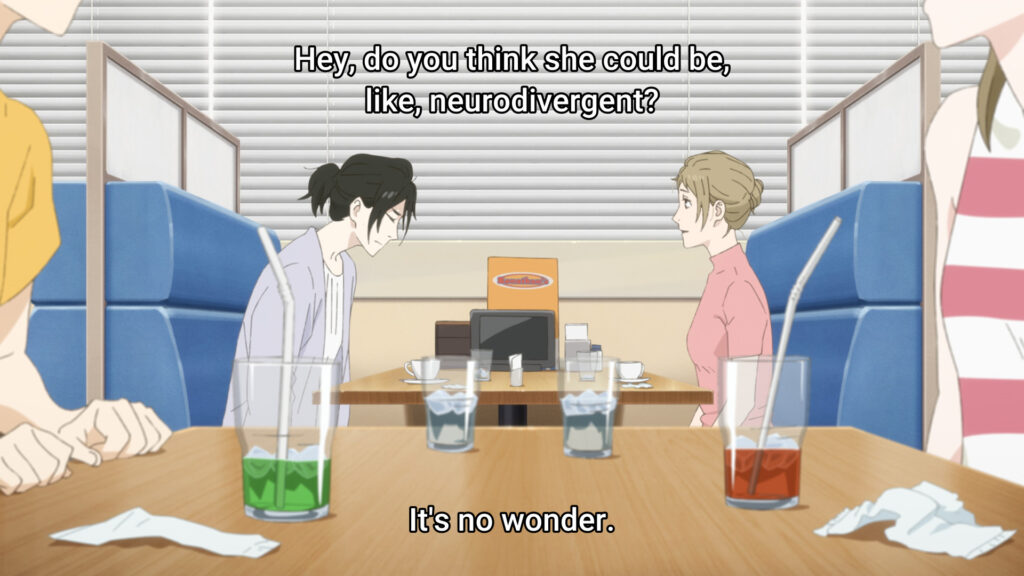
Honestly, I really wanted to like this series more than I did. The characters are plenty charming, the art style is nice, and I’m an absolute sucker for “unprepared loner takes in a child” stories. But Journal with Witch mostly ends up a disjointed mess, like the studio is going through the motions of the source material without fully understanding it or thinking through how to effectively adapt it into an anime. The mid-scene soliloquies are gasping for air without the infinite space for digestion manga panels allow. And while I get that the philosophical points conveyed by Makio to Asa are intentionally worded to go over juvenile Asa’s head, they’re ultimately meaningless to the audience when they don’t effectively tie back into that episode’s events.
I think there’s enough here that I’d like to check the manga out, though. The anime (and presumably the manga) take place over the course of a year, and 13 episodes just isn’t enough for the developing relationships and important events in Asa’s life to feel as weighty as they should. As a television show, Journal with Witch feels like a can of condensed soup. They try to shove all the flavor into half of the necessary space, but it just doesn’t taste that great once you add the water back in. Manga seems like a better medium to tell this story.
As a side note, I’m unsure why the localizers went with “Journal with Witch” for the English title, when the Japanese title, Ikoku Nikki (roughly “Foreign Country Diary”), is a constant visual motif for expressing the otherness or distance felt between the characters. I guess “witch” is supposed to represent how different Makio is from the other adults she’s known, but that falls apart pretty quickly when they show her standing in the desert every episode.
You and I Are Polar Opposites
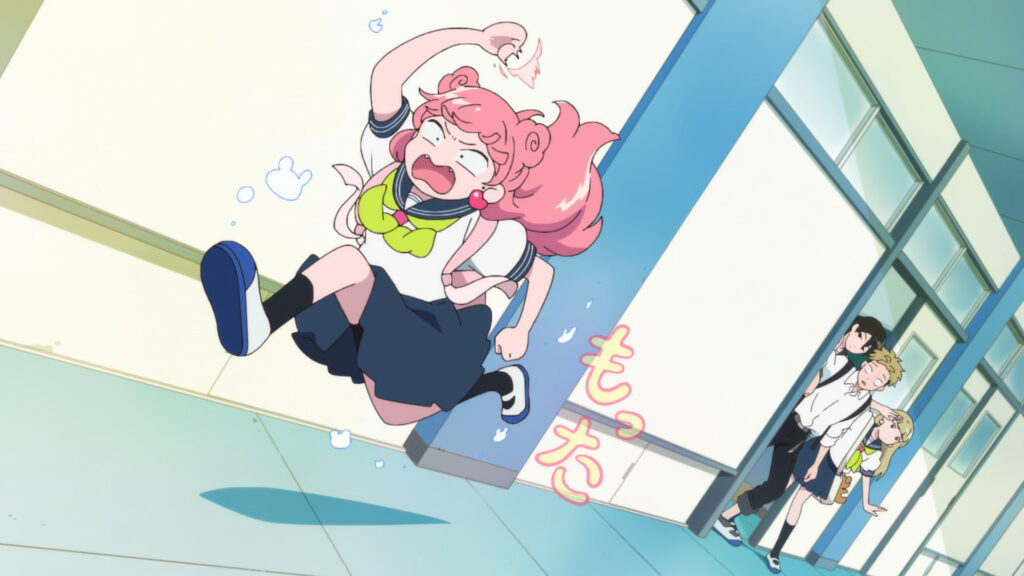
Skip and Loafer fans, this one’s for you! On paper,You and I Are Polar Opposites is a love story between main characters Yuusuke and Miyu, but like Skip and Loafer, it’s also a fantastic representation of what friend groups in high school are like. When you don’t share a club or common motivation, you end up with a bunch of weirdos who have nothing to do but mess around together, slowly creating their own language of in-jokes and mutual understandings. Polar Opposites invites you into one such clique, featuring a variety of contrasting personalities that somehow click together.
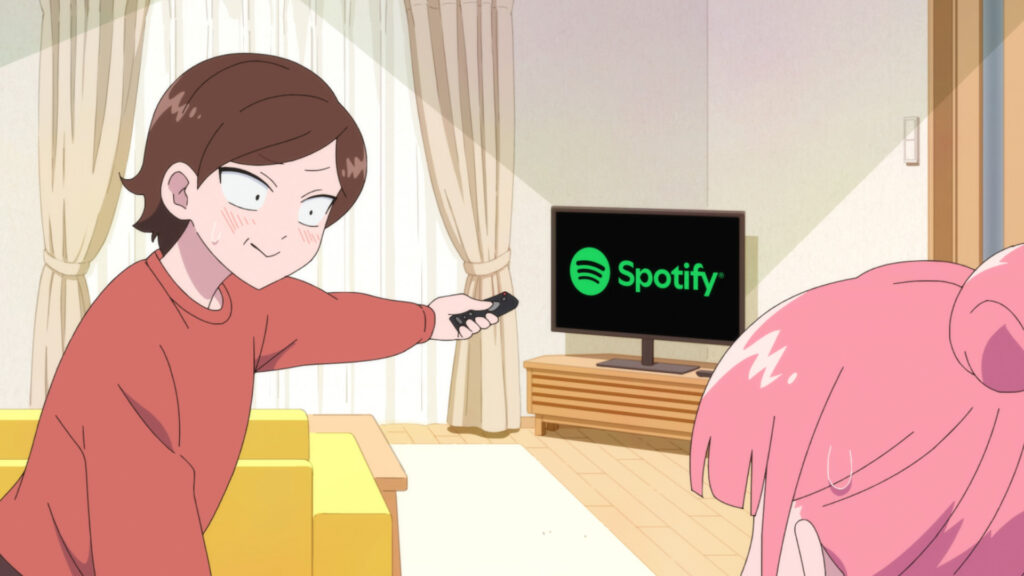
You and I Are Polar Opposites is one of three series this season that I’m familiar with the source material of, and it’s the one that felt the most reliant on a solid adaptation. The other two are what they are, but Polar Opposites is a fairly uneventful manga with a lot of charm that may not necessarily translate well. Thankfully, Lapin Track has done a fantastic job here. The art style and visual gags have carried over without diminishing their charm. The pacing is perfect, the opening and ending are great, and the soundtrack is weirdly banging. Thanks, Spotify!
This show falls kind of short in the drama department, instead focusing on the mild troubles its characters encounter hanging out together and how they support each other throughout. It’s funny and thoughtful enough that it doesn’t feel one note, but I’m hoping the recently announced second season has a few stronger serious moments that make romcom series like this really shine (the first season caught up to where I am in the manga, so I have no idea what comes next).
Hana-Kimi: For You in Full Blossom
Nearly 30 years after the manga’s debut and more than 20 years since its ending, Hana-Kimi got an anime adaptation! Why now? I have no idea! But it’s here now!
Hana-Kimi follows Mizuki Ashiya, who returns to Japan from America and enrolls in an all-boys school, all because she was once inspired by one its students’ high jumping form. Naturally, Mizuki ends up as roommates with Izumi Sano, the very man she admires! Did I mention Mizuki is a girl and is crossdressing to attend the academy? It’s anime, baby!!!
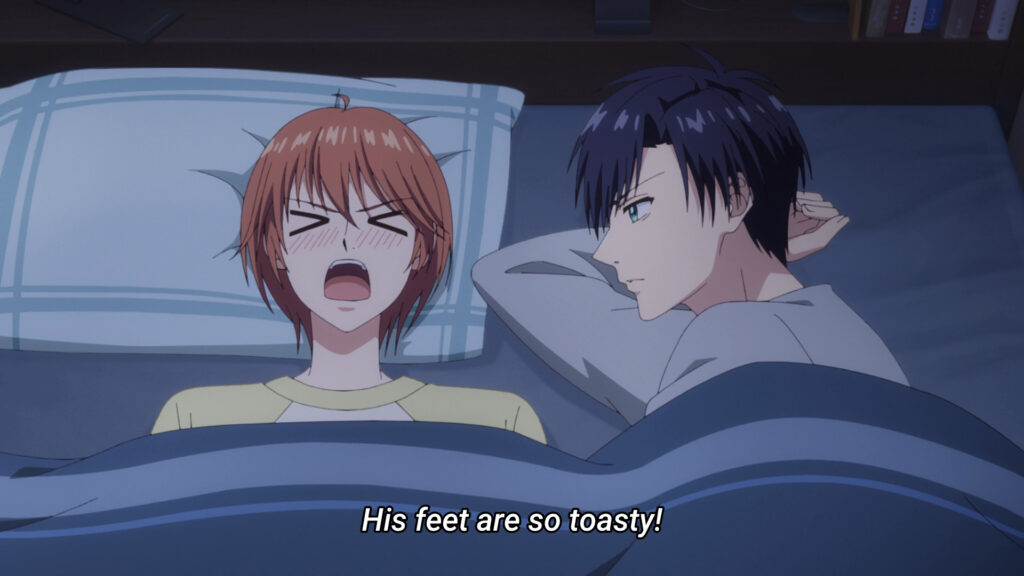
Unlike most secret crossdressing series, Hana-Kimi is generous enough to the audience that a couple of people immediately realize Mizuki is a girl, including her roommate and crush Izumi. Does he tell her he knows this? No, of course not. That would make things awkward. Certainly there won’t be any problems like Izumi accidentally drinking a bottle of wine and kissing her or sleepily inviting her into bed to hug her when she has a nightmare. Perish the thought. If these two aren’t enough, there’s a whole cast of dumbass side characters, including Mizuki’s friend Nakatsu, who finds Mizuki so attractive that he accepts his own homosexuality. It’s anime, baby!!!
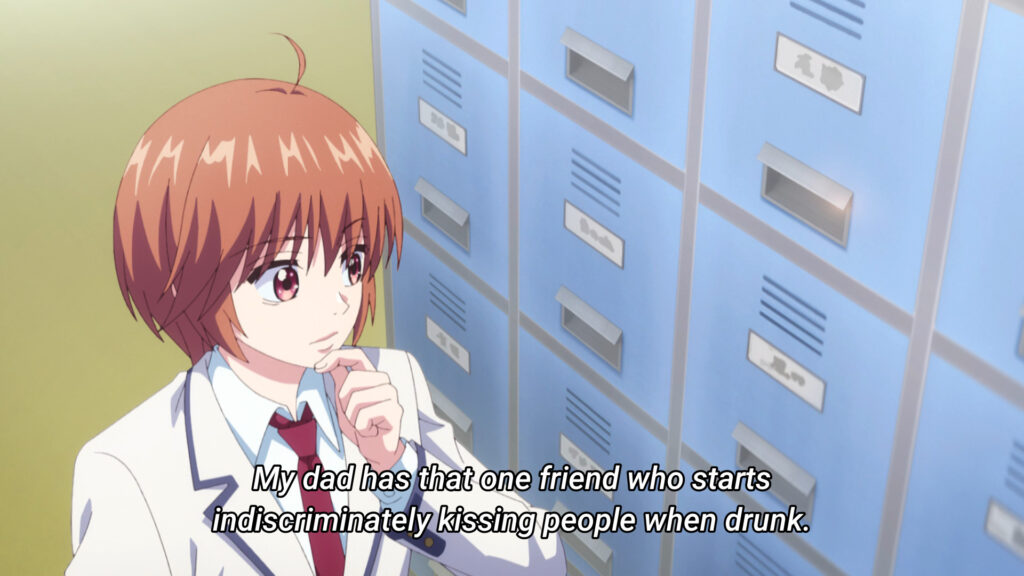
If I had to choose one show this season to get more episodes, this would be the one (since writing this a new season has been announced, wahoo). There are many choices with the adaptation I’m not a fan of, such as setting the show in 2026 (including giving everyone cell phones and constantly having to write themselves out of that) or heavily relying on generic 3D models for backgrounds. And yet, the source material is compelling enough to make up for this. It’s not as though Hana-Kimi is a masterpiece. Stupid things are constantly happening. It’s dumb as hell. But it’s got that special sauce to it that makes it incredibly fun to watch.
Sadly, while the series’ mangaka Hisaya Nakajo was apparently involved in the early planning of the adaptation, she has since passed away. I’m glad the project still came to fruition to introduce a new generation to her work.
Tamon’s B-Side
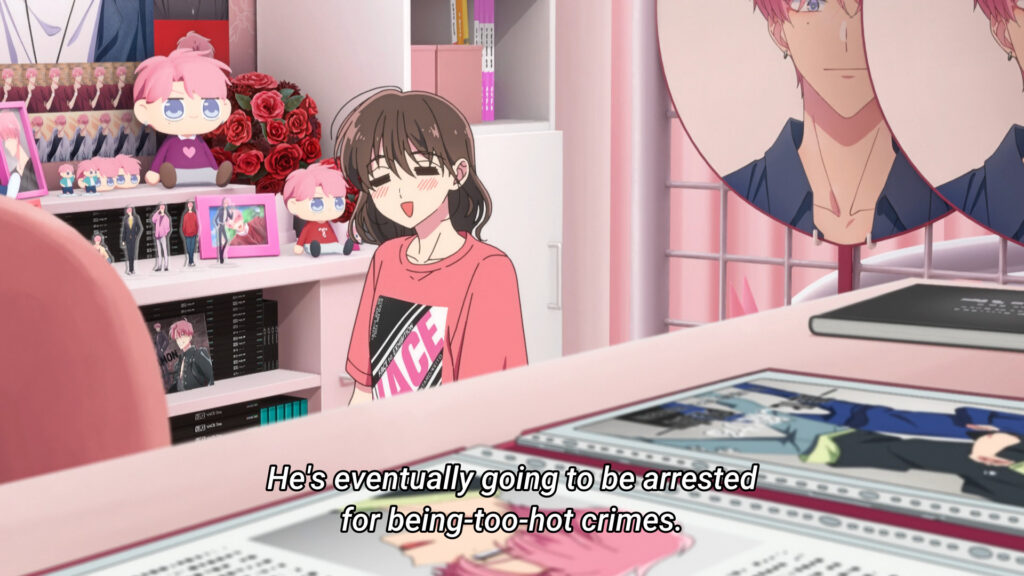
Golly gee, TWO good shoujo anime in ONE season! I almost missed out on this one, so I’m glad my friend told me to check it out. Tamon’s B-Side is based on a manga by Yuki Shiwasu, the mangaka behind a shoujo series I liked quite a bit, Takane & Hana. It follows idol otaku Utage Kinoshita, who works as a housekeeper to fund the support of her oshi, Tamon Fukuhara of boy group F/ACE. If you can believe it, she ends up as the housekeeper for the very man she dedicates her life to. That concept alone wouldn’t be particularly exciting, so fortunately, he turns out to be deeply mentally ill. Now That’s What I Call Music!
Much like Takane & Hana, Tamon’s B-Side depicts a relationship with an imbalanced power dynamic comically flipped on its head. Utage is constantly rejecting Tamon’s advances, preferring to remain a faceless (heh) fan. Utage becomes increasingly skilled at dealing with Tamon’s various mood swings and personality shifts. We’re slowly introduced to the other members of F/ACE, each of which turns out to be deeply mentally ill. NTWICM. As she becomes more and more integrated with the group and their issues, Tamon becomes increasingly possessive and creepy. I think he threatens to jump off a roof at one point. It’s awesome.
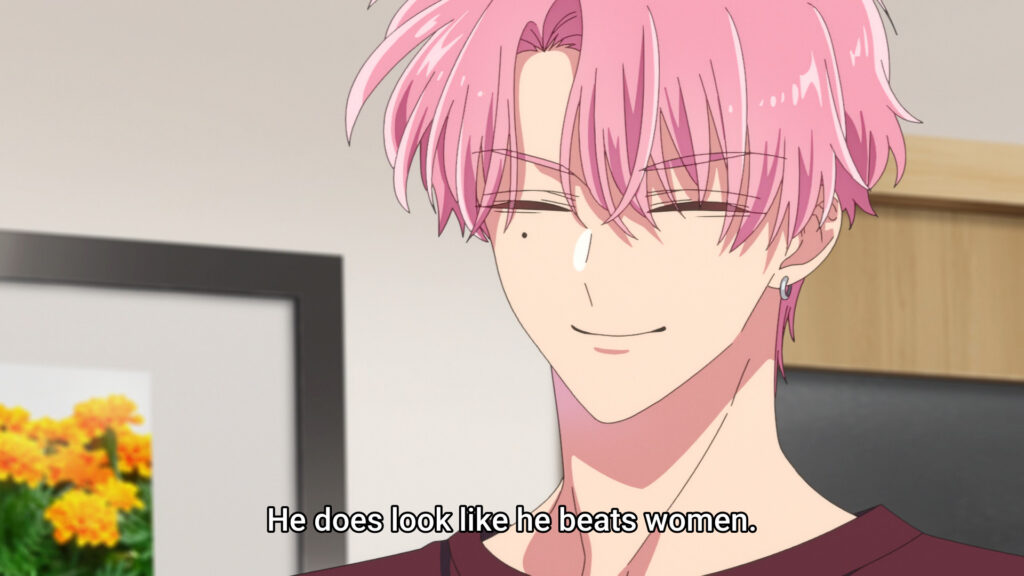
I suppose Tamon’s B-Side probably falls into the guilty pleasure slot this season. I know of no such thing as self restraint, so it’s naturally my favorite of the season as well. I love ridiculous, unbelievable shoujo plotlines, and I probably always will. Utage’s unconventional personality never fails to disappoint, giving unexpected and genuinely funny reactions to discovering the many sides of her oshi. Plus, Saori Hayami of Cosmic Princess Kaguya fame voices Utage. Her voice has deeply infiltrated my brain since her appearance in Pseudo Harem a couple of years ago. Hearing it drives me insane (positive).
In the Clear Moonlit Dusk
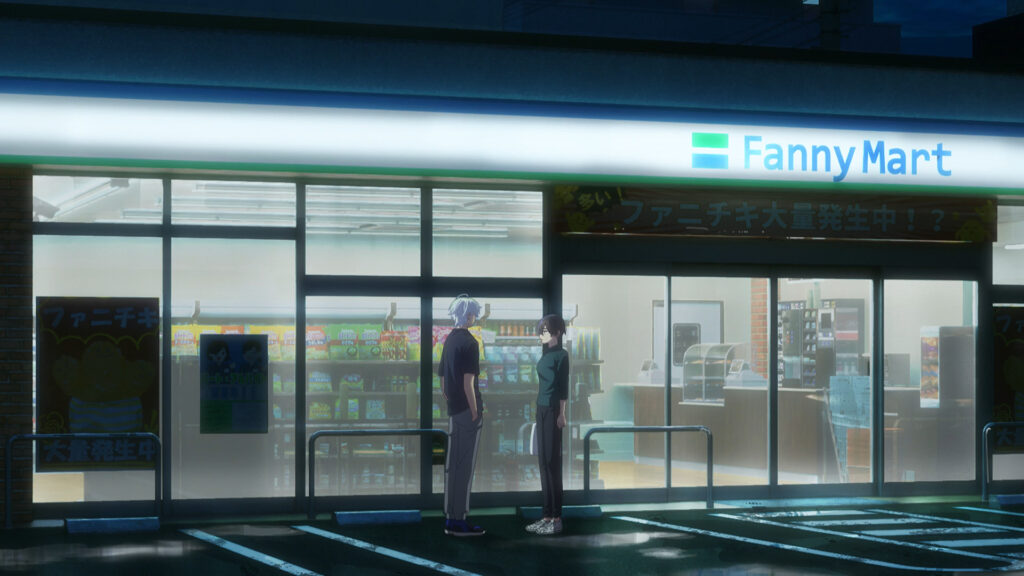
Well, not every shoujo series can be good. This is the only one of the three I watched this season that I’ve read the manga of, and my first reaction to it getting an adaptation was, “Why this one?” In the Clear Moonlit Dusk dares ask, can a traditionally attractive woman and a traditionally attractive man fall in love? Yoi Takiguchi is known around her high school as a prince, thanks to her short hair, tall stature, and ability to overachieve in just about everything. She meets Kohaku Ichimura, a boy also known as a prince thanks to his short hair, tall stature, and ability to overachieve in just about everything. I’m falling in love with these characters already!
The real driving factor behind the romance is that Kohaku is somehow the only boy in school interested in Yoi as a woman. She rejects his advances at first because of his playboy-like nature, but eventually they start dating on a trial period. The problem with this setup is that, while Yoi is frequently treated as a hot guy by those around her, she doesn’t seem to have that much trauma around the issue. Sure she finds difficulty dressing femininely because of the box she’s found herself in, but she gets over this fairly quickly. Kohaku’s reputation as a guy who flirts with anyone is resolved in equal swiftness. You see, before, girls were only interested in him for his money, so he’s never truly fallen for someone and has a negative opinion on dating. Yoi, on account of doing absolutely nothing, breaks him out of this spell.
And so, the two attractive people without personalities start dating. There’s just not much reason to cheer for these two. Yoi’s awkward and innocent nature can be cute, but that kind of archetype is a dime a dozen in shoujo. I have a weak spot for scummy bad boys chasing after uptight girls, but again, there are plenty of series capitalizing on this dynamic in a way more interesting way. Kohaku has some unresolved tension in his family, but I really cannot give a shit about a CEO’s son being kinda moody about his dad. I’m 9 episodes into this and considering giving up and selling my volumes of the manga while I’m at it. Give Namaikizakari an anime, not this drivel!
Does It Count if You Lose Your Innocence to an Android?
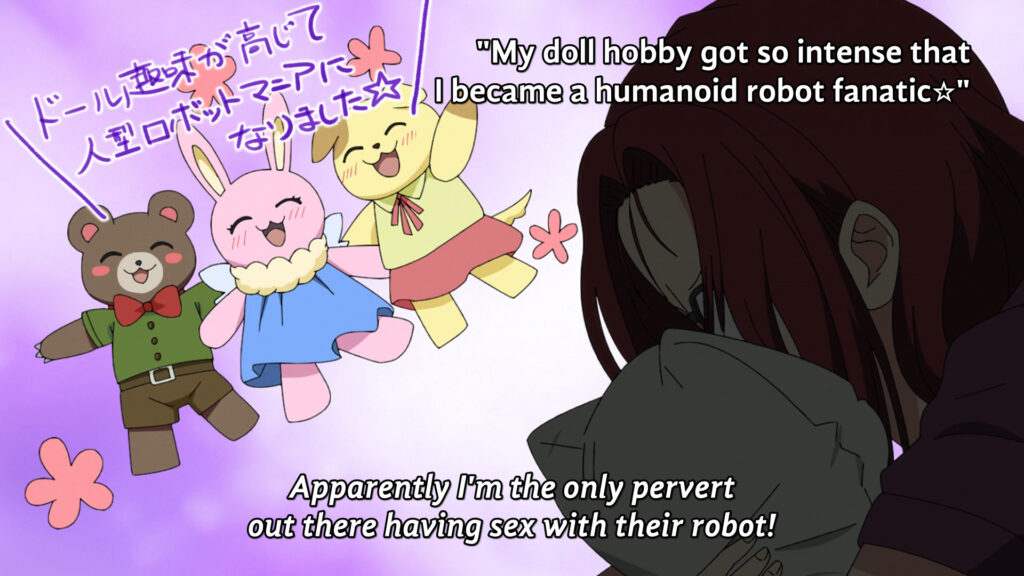
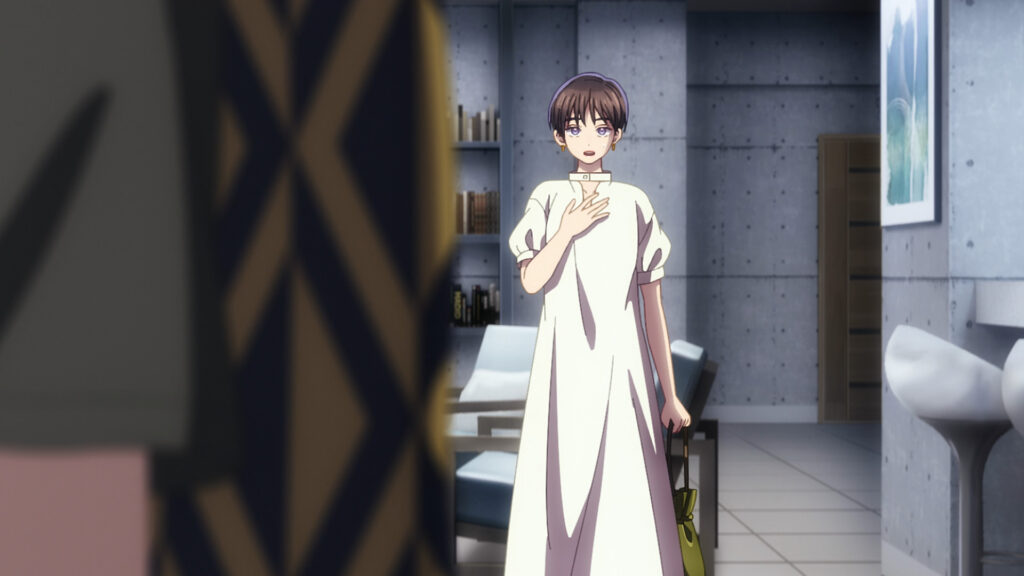
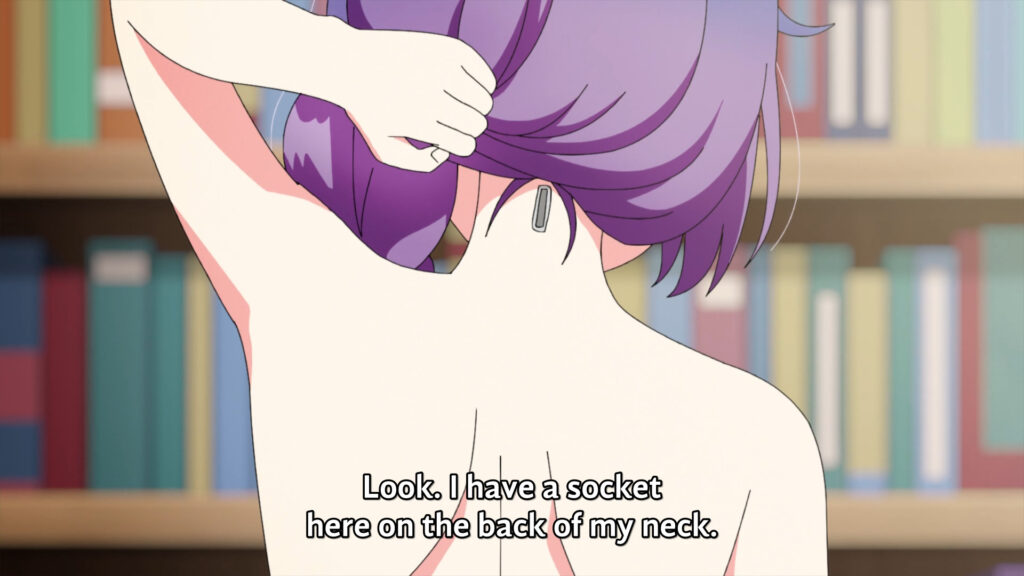
It’s the only short I watched this season, and it’s none other than an adaptation of a Yuri Hime android sex comedy! Having read the manga, I was absolutely shocked this was getting an adaptation. Of course, as is the fate of most Yuri Hime android sex comedies, the episodes are only five minutes and barely scrape into the actual plot. That’s probably fine for this one, given how bizarre the story gets. It does make me fear if Asumi-chan is Interested in Lesbian Brothels ever gets an anime, it’ll see the same treatment. Asumi-chan is Interested in Lesbian Brothels deserves better. Anyway, while it’s low budget, this adaptation is put together well enough to capture the mood of the manga. Is there any substance? Absolutely not! Are there substances? You know it!
This is a series put together by WWWave, a strange operation that’s trying to not only publish their own Renta-core manga but produce the anime for their original series without going through a middle man. They’ve even created their own streaming service, OceanVeil. They seem to be having some trouble getting that concept off the ground, though, since most of what they’ve put out are adaptations of series they don’t own. They did Chu-Hai Lips: Canned Flavor of Married Woman (banger) last year, as well as the absolutely horrific My Life as Inukai-san’s Dog a few years back. Unfortunately, they seem to be involved with some AI startups and “streamlining their business” with AI tools, so it’s hard to support this underdog. As far as I know, they haven’t used AI in their creative process yet, but it’s a definite worry.
Leave a Reply