It feels like technology does nothing but disappoint lately, mostly due to shit ass AI features, but also because of things like the high disposability of phones and the phasing out of useful product lines in favor of shit ass AI-riddled sludgeware. For a change of pace, I wanted to do a quick writeup of products I’ve been using for five years or more that are still trucking. Here are three items that have fundamentally changed how I interact with tech that have actually held up.
Onyx BOOX Air 2
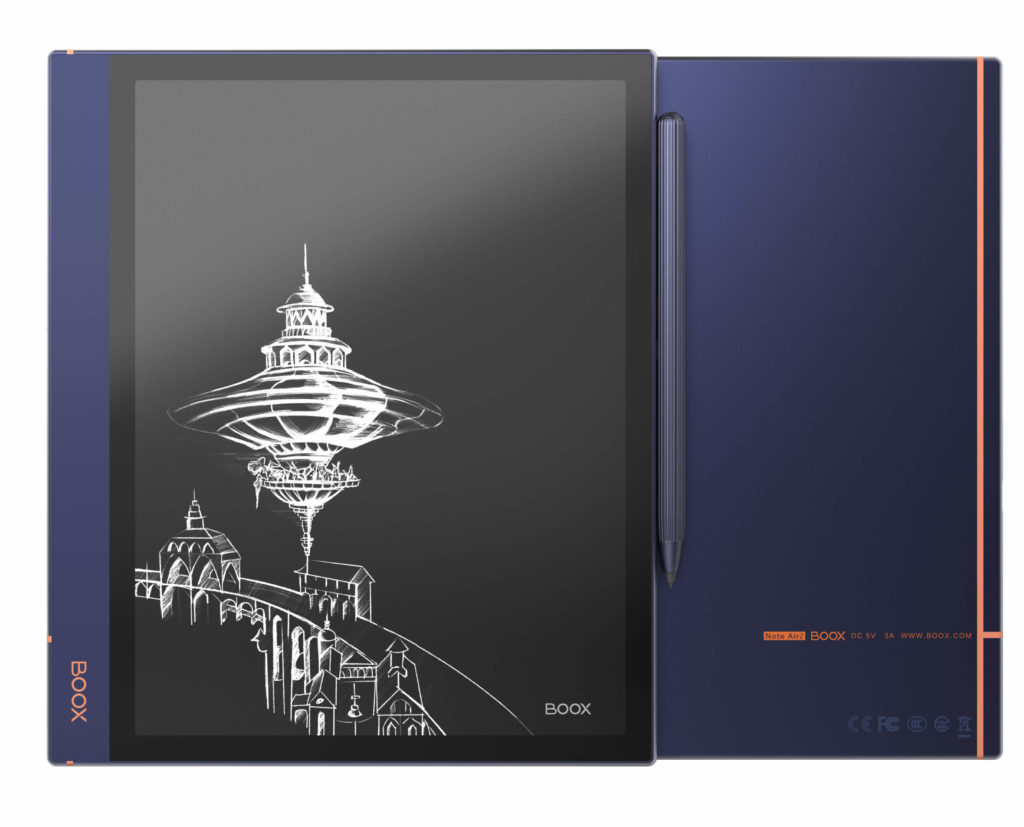
I picked up the BOOX Air 2 in 2021, making it the most recent purchase on this list. The BOOX series is a line of ereaders that run Android, enabling a number of possibilities that the typical Kindle or Nook-type devices aren’t capable of. The variety of BOOX devices is borderline ridiculous, from palm sized readers all the way up to 13-inch color eInk tablets with keyboard compatibility. The Air 2 was the perfect option for me, combining a 10-inch display that’s large enough to comfortably read manga with a lightweight build that isn’t too hard on my wrists.
I literally cannot read long articles, ebooks, or digital manga on anything else. Reading on traditional screens is way too hard on my eyes, typically giving me a headache or eyestrain for the rest of the day before I can even make it through a chapter. With a temperature adjustable eInk display, I’m able to comfortably read for a few hours, making it ideal for catching up on manga or reading novels on flights. The flexibility of the Android-based OS lets me load it with ebooks in any format, while also supporting just about every digital book storefronts’ apps. I typically buy physical copies of manga when possible, but for series that only exist in English online with fan translations, I’m able to read those on the BOOX using Mihon. I can read through Japanese apps like Book Walker or CMOA by installing their APKs manually or through a storefront like QooApp. I’ve even used the included pen to draw maps for video games (thanks Aria for the idea).
The Air 2 stopped receiving updates in 2023, but I’ve yet to run into any compatibility issues with the most recent apps. Apps do occasionally crash, but I suspect a more recent version of Android would only increase the likelihood of issues. The build quality is pretty good, though it suffers from vulnerability to The Bends like most thin tablets. I unknowingly sat on mine a couple of years ago, and it’s been slightly curved since. It still works, though! I’d like to ugprade to a color model at some point, but for now, the Air 2 is a near-perfect solution for my needs.
Nvidia Shield TV Pro
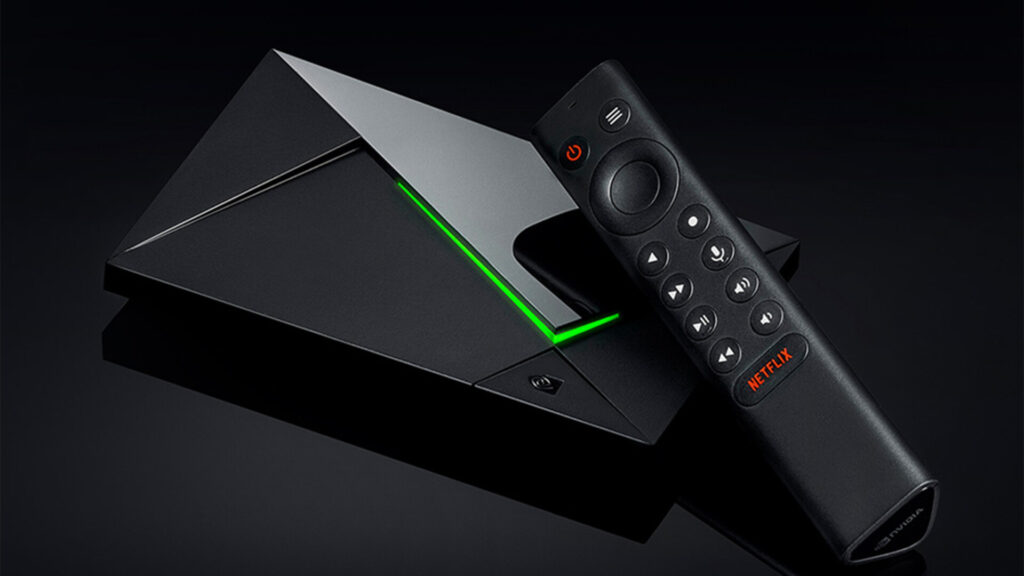
It looks like Nvidia just calls this the “Shield” now instead of Shield TV, but I’m still going to call it the Shield TV to differentiate it from the original Shield, which was a handheld gaming device. I bought the second generation of the Android TV-based Shield TV back in 2019, when Nvidia was still a slightly respectable company. At the time of purchase, it seemed to be the only competent non-Apple streaming box on the market. Everything else was a complete laggy mess, making every menu actively unpleasant to use. Honestly, the market isn’t that different today, though the “Google TV Streamer 4K” that replaced the Chromecast 4K seems bearable for use with streaming services. I bought the Pro model of the Shield, which has USB ports and additional RAM, with the intention of using it as an emulation and local game streaming box. That experience didn’t turn out to be particularly pleasant (mostly due to the pain in the ass that pairing controllers can be). It’s good I felt this way, since Nvidia discontinued their local game streaming app a while back. I think Steam Link still works, but it’s been a while since I’ve used it.
Anyway. The positives. That’s what we’re here to talk about. I use this thing just about every day. Over 95% of my time on Youtube is spent on the Shield TV. I exclusively watch anime off my Plex server, accessed via Android TV’s Plex app. Linking my computer via VLC’s SMB feature lets me easily watch everything else off my hard drive. For a while, I was even using a manually installed Discord APK with a bluetooth keyboard and mouse to tune into voice calls and streams. Running a Plex server on the Shield itself is possible too, though the lack of internal storage means it’s limited to a USB hard drives. Its possibilities are only limited by the apps available. That said, some of Android TV’s apps are doodoo ass. I shudder thinking back to watching on the VRV app.
Nvidia hasn’t released an updated version of the Shield TV since the year I bought mine, but it fortunately still receives software support. I’m sure they’ll quietly kill it off instead of introducing a new version once they determine the hardware is too out of date. But for now, this 6 year old device is still the best option on the market. I don’t want to use keyboard and mouse navigation, which cuts out Linux-based options. The PS5 can run Youtube and Plex just fine, but it’s significantly more power hungry than the Shield. Some smart TVs have more competent operating systems than my TCL’s horrendous Roku OS, allowing for a decent streaming experience. I’d still much rather have a dedicated box than connect my TV to the internet, especially with cases like LG shoving Copilot onto everyone’s TV. The only place the Shield really comes up short is that it doesn’t have hardware AV1 decoding, but I don’t even know what that is. Until pirates move onto something that isn’t h265, the Shield TV should continue to meet my needs.
MiSTer
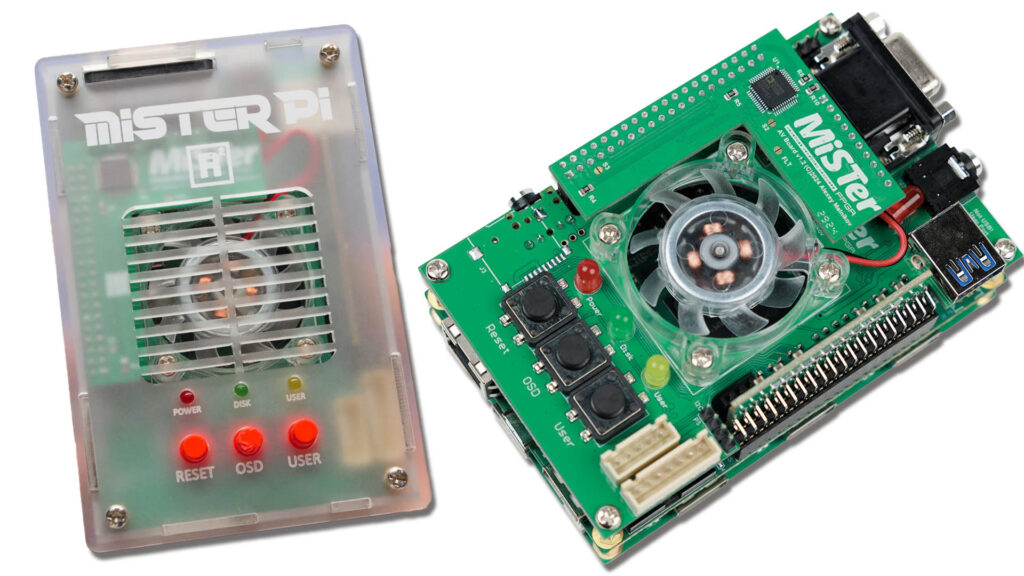
I probably have a disproportionately high ratio of followers who know what a MiSTer is, but if you don’t, let me explain: much like Analogue’s products, the MiSTer is an FPGA-based gaming system, meaning the emulation is done at the hardware level instead of the software level. This generally leads to more accurate emulation and less input lag (though the software emulation community has made significant strides in leveling the field here). Unlike Analogue’s releases, the MiSTer is entirely open source and community driven, which has resulted in a platform with support for an absurd number of consoles, arcade games, and computers.
The MiSTer has become my go-to solution for any pre-3D console. I would prefer to use real hardware for everything, but that’s becoming absurdly expensive and is quite impractical from a storage perspective. So I decided to make my ~real hardware~ cutoff at the Playstation generation and use the MiSTer for everything older. The vetted accuracy for the most popular consoles soothes my reptillian brain, which is known to immediately impede upon any fun I’m having should I encounter the slightest hitch in emulation. While many of the arcade platforms are heavily based on their corresponding MAME cores and thus not reverse engineered from the hardware itself, it’s still nice to have a dedicated box I can boot up instead of digging through files on my PC. Additionally, the MiSTer offers features for insane people like myself, such as outputting the exact refresh rate of the console instead of syncing everything to 60 Hz. There’s even a system called SNAC for connecting console’s controllers while completely bypassing the input stack, cutting input lag and theoretically allowing an input experience identical to the original console.
I first put my MiSTer together in 2020, and it’s only gotten better since then. When I built mine, the process required separate purchases of the base FPGA board, SDRAM, and IO board to get to the configuration I wanted. But in recent years, the creation of clone boards and all-in-one solutions has made the platform significantly more accessible. What was once a nearly $600 investment can now be had for $200 or less. A growing community means even better software support, evident through the release of Playstation and Nintendo 64 cores, things considered nearly impossible when the platform first launched. Most exciting for me are the in-progress implementations of more niche consoles that lack accurate emulation, such as the CD-i and 3DO. Once those are complete, we’re only a PC-98 and Atari Jaguar core away from what I believe to be an absolutely perfect device.
This isn’t a device for everyone; FPGAs are slower than traditional PC hardware and implementations of advanced hardware become increasingly impossible, meaning the MiSTer and even future FPGA projects will probably never support something like the Dreamcast or Playstation 2. But for retro enthusiasts or people who just want to play with a console’s original controllers without dealing with fuck ass USB adapters, I can’t think of a better solution.
Leave a Reply